Introduction
When it comes to weight loss, one of the most common questions people ask is whether brown rice or millets are the better choice, especially in terms of calorie content. Both are considered healthier alternatives to refined grains, and both offer more nutrients than white rice. However, if your goal is to lose weight, simply choosing a “healthy” option is not enough—you need to understand how these foods differ in calories, digestion, and their overall effect on hunger and fat loss.
Calories matter in weight loss, but they are not the only factor. The way a food is digested, how full it makes you feel, and how it affects your blood sugar levels all play an important role. Brown rice and millets may appear similar at first glance, but they behave quite differently inside the body.
Calorie Comparison: Brown Rice vs Millets
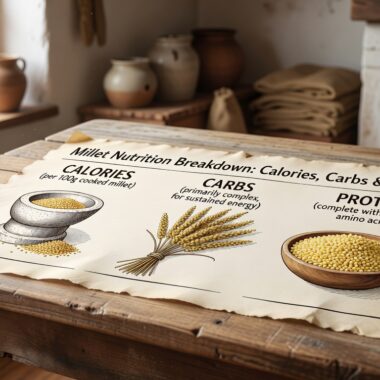
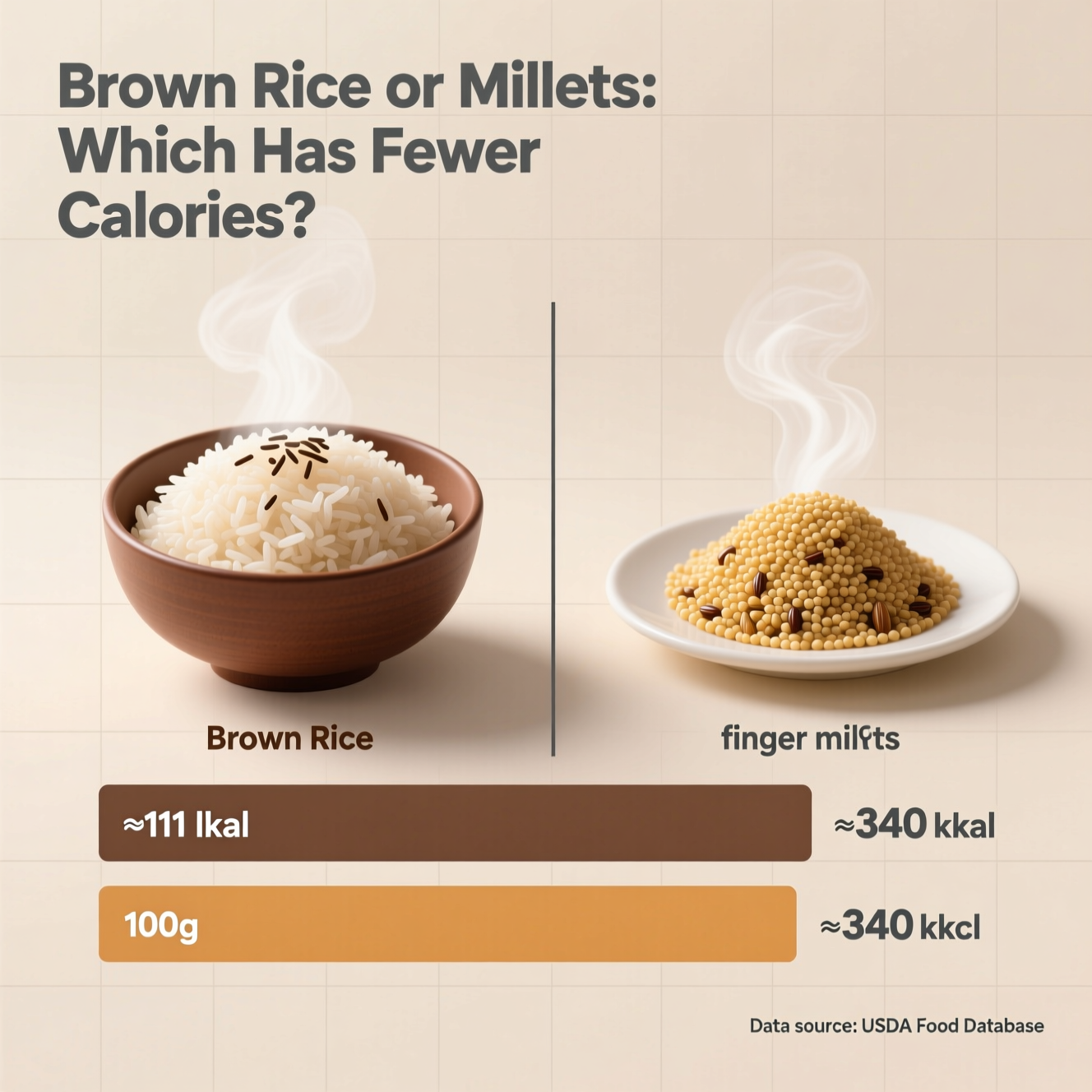
At a basic level, brown rice and most millets have a relatively similar calorie range when measured in their raw form. Brown rice typically contains around 110 to 120 calories per 100 grams when cooked, while millets fall in a similar range depending on the type. This means that strictly in terms of calories, neither option has a dramatic advantage over the other.
However, focusing only on calories can be misleading. The real difference lies in how these calories are processed by the body. Two foods with similar calorie counts can have very different effects on hunger, energy levels, and fat storage.
How Digestion Affects Calorie Utilization
Brown rice is a whole grain and contains more fiber than white rice, which helps slow down digestion to some extent. However, compared to millets, it is still digested relatively faster. This can lead to a quicker rise in blood sugar levels, followed by a drop that may trigger hunger sooner.
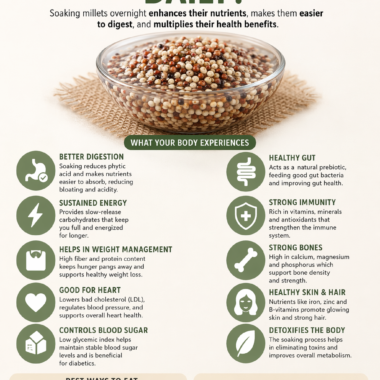
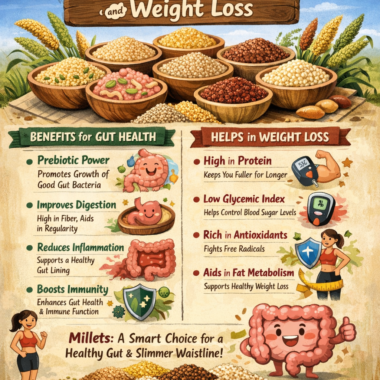
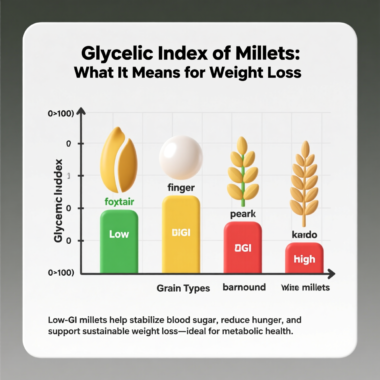
Millets, on the other hand, are generally higher in fiber and have a lower glycemic index. This means they digest more slowly and release energy gradually. As a result, the body uses the calories more efficiently over a longer period, reducing the likelihood of fat storage.
This slower digestion also means that millets keep you full for longer, which can naturally reduce your overall calorie intake throughout the day. In weight loss, this indirect effect often matters more than the actual calorie count.
Satiety: Why Feeling Full Matters More Than Calories
One of the biggest advantages of millets over brown rice is their ability to increase satiety. Because of their high fiber content, millets expand more during cooking and create a greater feeling of fullness. This can help you eat less without feeling hungry.
Brown rice, while more filling than white rice, does not provide the same level of satiety for many people. This can lead to larger portion sizes or additional snacking, which increases total calorie intake over time.
In practical terms, even if both foods contain similar calories per serving, you may end up consuming fewer calories overall when eating millets because they help control hunger more effectively.
Nutritional Density and Its Role in Weight Loss
Beyond calories, millets offer a wider range of nutrients compared to brown rice. They are rich in minerals such as magnesium, iron, and antioxidants, which support metabolism and overall health. A well-functioning metabolism is essential for efficient fat loss.
Brown rice also contains important nutrients, but its profile is generally less diverse compared to millets. While it is still a healthy option, it may not provide the same metabolic benefits.
Nutrient-dense foods help the body function optimally during weight loss, ensuring that you do not feel fatigued or deprived. This makes it easier to maintain a consistent diet over time.
Which One Is Better for Weight Loss?
If the comparison is based purely on calorie count, brown rice and millets are quite similar. However, when considering the bigger picture—including digestion, satiety, and metabolic impact—millets often have an advantage.
Millets are more effective at controlling hunger, stabilizing blood sugar, and supporting sustained energy levels. These factors make it easier to maintain a calorie deficit, which is the key to weight loss.
That said, brown rice can still be part of a weight loss diet when consumed in moderation and combined with other nutrient-rich foods. The best choice ultimately depends on your preferences, lifestyle, and ability to maintain consistency.
How to Choose Between Brown Rice and Millets
The decision between brown rice and millets does not have to be absolute. Many people benefit from including both in their diet, using each in different situations. Millets can be prioritized for meals where satiety and blood sugar control are most important, while brown rice can be used occasionally for variety.
Portion control remains essential regardless of the choice. Even the healthiest foods can contribute to weight gain if consumed in excess. Pairing either option with protein and vegetables enhances their effectiveness for weight loss.
Cooking methods also matter. Keeping meals simple and avoiding excessive oil ensures that the calorie content remains under control.
Conclusion
Brown rice and millets are both healthier alternatives to refined grains, and their calorie content is quite similar. However, millets offer additional advantages in terms of satiety, digestion, and metabolic support, making them a stronger choice for weight loss.
The key takeaway is that calories alone do not determine the effectiveness of a food for fat loss. How a food affects hunger, energy, and overall eating patterns plays a much bigger role. By choosing foods that keep you full and satisfied, you can naturally reduce calorie intake and achieve more sustainable weight loss results.