Introduction
Fat loss is often associated with cutting carbohydrates, but completely eliminating carbs is not always practical or sustainable. This is where carb cycling becomes a smarter approach. Instead of removing carbohydrates entirely, carb cycling involves strategically adjusting your intake based on your activity level and goals. When combined with nutrient-dense foods like millets, this method can become both effective and sustainable.
Millets offer a unique advantage in carb cycling because they provide slow-digesting carbohydrates, fiber, and essential nutrients. This means you can include carbs in your diet without triggering extreme hunger or energy crashes. Understanding how to use millets within a carb cycling strategy can help you lose fat while maintaining energy and consistency.
What Is Carb Cycling and How It Works
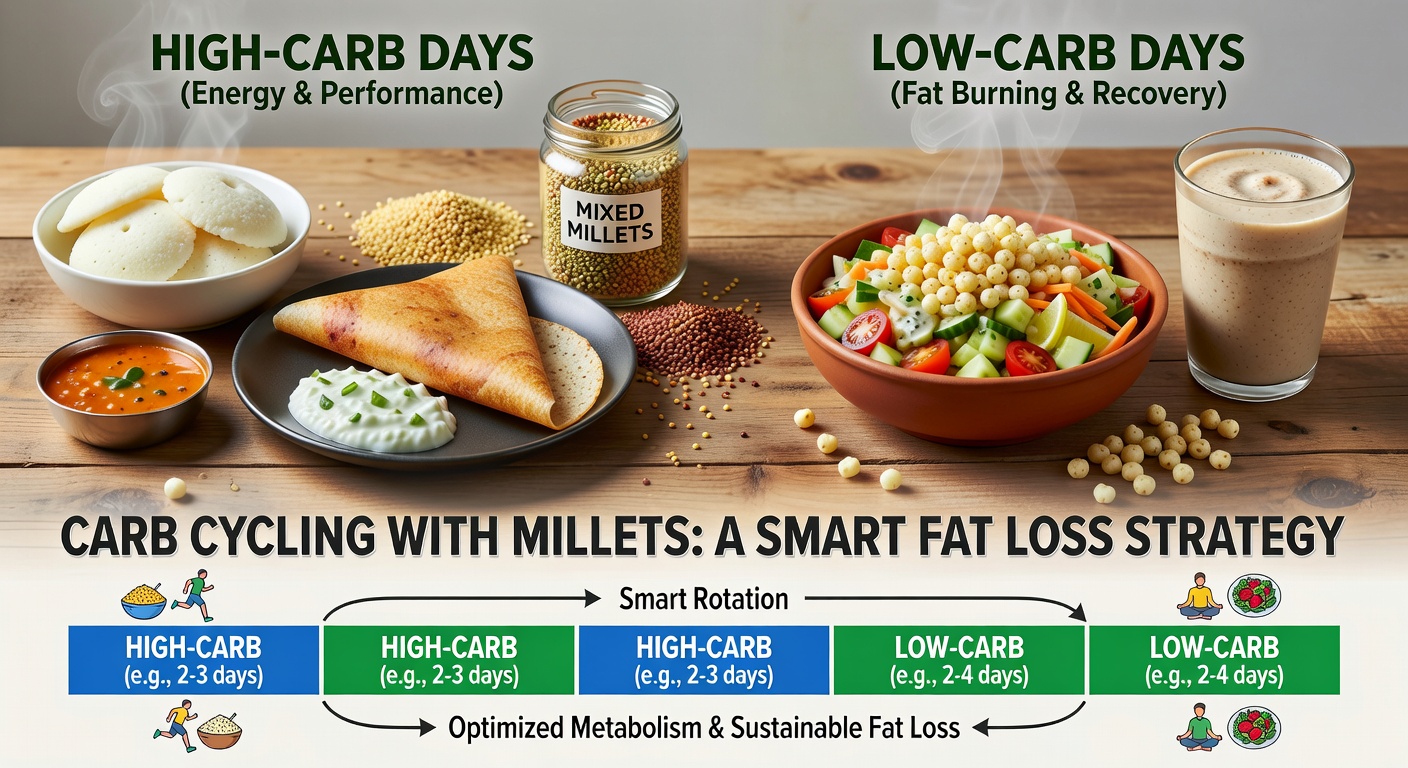
Carb cycling is a dietary approach where carbohydrate intake varies across different days. On high-carb days, you consume more carbohydrates to fuel activity and replenish energy stores. On low-carb days, you reduce carbohydrate intake to encourage the body to use stored fat as energy.
This approach works by balancing energy availability with fat utilization. Instead of constantly restricting carbs, you give your body periods of higher intake to maintain performance and metabolism, followed by lower intake to promote fat burning.
The key is not just the quantity of carbs, but also their quality. This is where millets can play a significant role.
Why Millets Fit Perfectly into Carb Cycling
Millets are not like refined carbohydrates that digest quickly and cause spikes in blood sugar. They release energy gradually, helping maintain stable glucose levels. This makes them ideal for both high-carb and moderate-carb days.
On high-carb days, millets provide sustained energy without causing rapid spikes and crashes. This helps improve performance and reduces the likelihood of overeating. On lower-carb days, smaller portions of millets can still be included to maintain balance without exceeding your carbohydrate targets.
Their fiber content also supports satiety, making it easier to manage hunger across different phases of the cycle.
How Carb Cycling Supports Fat Loss
The effectiveness of carb cycling lies in how it influences metabolism and energy use. On low-carb days, the body is encouraged to use stored fat for energy. This contributes to fat loss over time.
High-carb days, on the other hand, help maintain metabolic activity and prevent the slowdown that often occurs with continuous calorie restriction. They also support physical activity by providing the energy needed for workouts or daily tasks.
By alternating between these phases, carb cycling creates a balance that supports both fat loss and energy maintenance. Including millets ensures that even on higher-carb days, the quality of carbohydrates remains beneficial.
Using Millets on High-Carb Days
On high-carb days, millets can serve as the primary carbohydrate source. Their slow digestion helps maintain stable energy levels throughout the day. This is particularly useful if you have a physically active schedule or plan to exercise.
Combining millets with protein and vegetables creates balanced meals that support both performance and recovery. This approach helps maximize the benefits of higher carbohydrate intake without leading to excessive calorie consumption.
Using Millets on Low-Carb Days
On low-carb days, millets should be used in smaller portions or limited to specific meals. This allows you to reduce overall carbohydrate intake while still benefiting from their nutrients.
Pairing smaller portions of millets with protein and vegetables helps maintain satiety and prevents hunger. This balance is important for staying consistent with the plan and avoiding overeating.
The goal on these days is not to eliminate carbs completely but to keep them controlled and strategic.
Balancing Portions and Timing
Portion control is essential in carb cycling. Even healthy carbohydrates like millets can slow down fat loss if consumed in excess. Adjusting portion sizes based on the type of day ensures that you stay within your targets.
Timing also plays a role. Consuming millets earlier in the day or around periods of activity helps the body use the energy more efficiently. This supports both performance and fat loss.
Consistency in following the cycle is more important than perfection. Small, steady adjustments over time lead to better results.
Common Mistakes to Avoid
One common mistake is treating high-carb days as an opportunity to overeat. While carb intake increases, overall calorie control is still important. Another issue is cutting carbs too aggressively on low-carb days, which can lead to fatigue and reduced consistency.
Ignoring the quality of carbohydrates is another factor. Even within a carb cycling plan, choosing refined carbs instead of nutrient-dense options like millets can reduce effectiveness.
Balance and moderation are key to making this strategy work.
Conclusion
Carb cycling with millets offers a balanced and sustainable approach to fat loss. By adjusting carbohydrate intake while focusing on quality, you can support both energy levels and fat burning. Millets provide the ideal type of carbohydrates for this strategy, helping maintain stability and satiety.
The success of this approach depends on consistency, portion control, and understanding how to adapt your intake based on your needs. When used correctly, carb cycling with millets can become a practical and effective way to achieve long-term weight loss.